
Hyundai has formally named the Santa Fe as its first extended-range electric vehicle, saying Wednesday that the new SANTA FE EREV will be built at Hyundai Motor Manufacturing Alabama and will “arrive” in the first half of 2027. Hyundai says it expects more than 600 miles of total range.1
That 600-plus-mile number is not the new part of the announcement — and Hyundai’s current release does not present it as an EPA rating. The company was already publicly targeting more than 600 miles for its EREV program at its September 2025 CEO Investor Day, when it also said EREVs would launch in 2027.2
What Hyundai added on Aug. 26 is much more specific: the Santa Fe is now the named first product, Hyundai has tied it to its Alabama plant, and the company has narrowed the vehicle-level timing to the first half of 2027.1
Hyundai’s EREV plan predates the Santa Fe announcement
Hyundai first laid out its North American EREV strategy in August 2024. At the time, it said the system would drive the vehicle electrically while using the combustion engine only to charge the battery. Hyundai also described a two-motor setup for four-wheel drive, targeted more than 900 kilometers of total range, and said North American and Chinese mass production was planned by the end of 2026 with sales beginning in earnest in 2027.3
Those were program-level plans, not final Santa Fe specifications. Hyundai’s current Santa Fe announcement does not restate the full drivetrain layout, so it would be premature to assume every element of the 2024 architecture description carries over unchanged to the production vehicle.13
By September 2025, Hyundai was already publicly targeting more than 600 miles and said its EREV approach would use less than half the battery capacity of a comparable EV while aiming for EV-like performance.2 The range figure and smaller-battery pitch therefore predate Hyundai’s formal Santa Fe confirmation.12
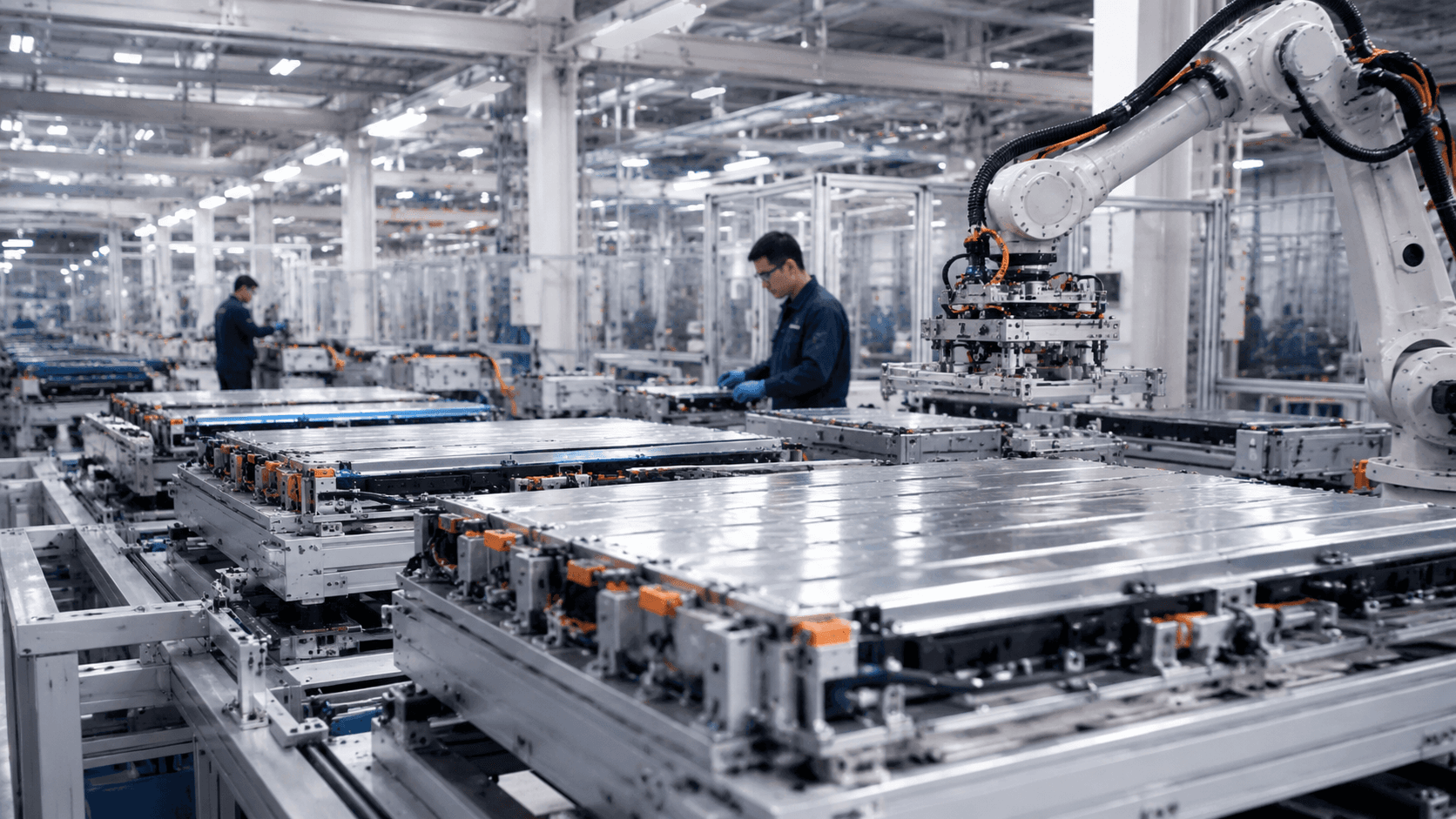
The Alabama production plan is a more concrete new detail. Hyundai says the Santa Fe EREV will be built at Hyundai Motor Manufacturing Alabama.1 The plant already assembles the conventional Santa Fe and Santa Fe Hybrid, along with the Tucson and Santa Cruz, and says it employs about 4,200 people.4 HMMA’s current public site does not specify an EREV-related investment, tooling change or incremental job count, so the production announcement should not be read as evidence of any of those changes yet.4
The important Santa Fe specs are still missing
Hyundai’s Aug. 26 release gives the Santa Fe EREV an expected total range of more than 600 miles, but it does not identify that figure as EPA-rated range.1 It also does not publish the vehicle’s battery capacity, EV-only range, peak charging power, charging curve, final U.S. model year, order-opening date or first customer-delivery date.1
The company’s use of “arrive in the first half of 2027” is similarly broad. Hyundai has not defined that phrase in the current release as start of production, dealer arrival or first customer delivery.1 And the timing does not, by itself, establish a delay: Hyundai’s 2024 plan called for North American EREV mass production by the end of 2026 and broader sales in 2027, a sequence that can still fit the new H1 2027 product window.3
Hyundai did add new battery claims Wednesday. The company says newly developed in-house cells provide more than double the output of the high-nickel cells it previously used and reduce charging time by 40 percent, and says those cells will be applied to the EREV arriving in the first half of 2027.1 But the release does not disclose the output metric, battery size, charging-power baseline, state-of-charge window or test conditions behind those comparisons, so the percentages cannot yet be translated into a specific Santa Fe charge time or charging rate.1
For now, the product news is narrower but more concrete than the headline range number suggests: Hyundai has put a production nameplate, a U.S. plant and a tighter timing window on the EREV strategy it has been describing since 2024.132 The next useful proof points are the Santa Fe’s U.S.-specific launch materials, regulator-rated range, battery and charging specifications, final drivetrain details and Alabama production timing.
Sources
Footnotes
-
Hyundai Motor Company Charts Profit-Driven Growth Roadmap at 2026 CEO Investor Day — Hyundai Motor Company, Aug. 26, 2026. https://www.hyundai.com/worldwide/en/newsroom/detail/0000001260 Primary company release establishing the Santa Fe EREV naming, H1 2027 arrival language, expected 600-plus-mile total range, Alabama assembly plan and new battery-cell claims. Future timing and performance figures remain Hyundai claims. ↩ ↩2 ↩3 ↩4 ↩5 ↩6 ↩7 ↩8 ↩9 ↩10 ↩11
-
Hyundai Motor Company Unveils Bold 2030 Vision and Product Roadmap at 2025 CEO Investor Day — Hyundai Motor Company, Sept. 18, 2025. https://www.hyundai.com/worldwide/en/newsroom/detail/0000001018 Historical primary source showing Hyundai had already announced a 2027 EREV launch, more-than-600-mile target and less-than-half-battery-capacity positioning. ↩ ↩2 ↩3 ↩4
-
Hyundai Motor Unveils New ‘Hyundai Way’ Strategy and Outlines Mid- to Long-Term Goals at 2024 CEO Investor Day — Hyundai Motor Company, Aug. 28, 2024. https://www.hyundai.com/worldwide/en/newsroom/detail/0000000817 Historical primary source for Hyundai’s program-level EREV architecture, end-2026 North American production plan and 2027 sales roadmap; it is not a final Santa Fe specification sheet. ↩ ↩2 ↩3 ↩4
-
Hyundai Motor Manufacturing Alabama — current site — Hyundai Motor Manufacturing Alabama, observed Aug. 26, 2026. https://www.hmmausa.com/ Current plant page listing Santa Fe and Santa Fe Hybrid assembly and approximately 4,200 employees; it does not establish future EREV-specific investment, tooling or jobs. ↩ ↩2